
Nadia Ahmed, Certified life coach and Consultant Orthodontist
Introduction
Self-growth can be likened to a tree, with the soil being the environment in which our roots can grow. Nourishing self-growth and development can help us to foster positive relationships in the workplace with our team and enable us to ensure we are in the right environment to flourish and grow.This series of articles will explore key life coaching topics and tools to help the reader. As a certified life coach, I have a keen interest and passion for coaching others, with a particular interest in identifying how we can truly live in alignment with our core values and how to achieve an ideal ‘work-life balance’.
What is a life coach and how is life coaching relevant to dentistry?
A life coach will lead a client into awareness through a series of empowering questions. This will lead them on a journey to reach their goals, help them to fill the gap between where they are now and where they want to be and to identify where growth is needed. It is essential to conquer these ‘invisible’ barriers that could be holding the individual back. Self-growth is fundamental to the realisation of which areas of life we need to progress. In coaching, the ‘quest’ is often how to find a ‘best’ direction. The term ‘best’ meaning one that will move us from where we are, to where we want to be in the future. Coaching can help us to achieve a deeper awareness of where we want to be and what actions we need to take, helping us to navigate our way through work and life. Life will present challenges and often we may face a need for re-direction or re-evaluation.
In this first article, I will be discussing the ‘growth mindset’ and the importance of understanding more about this in relation to the dental team.
Every year, we have 5,840 hours awake (based on an average of eight hours sleep every night). Of those hours, if working full-time, we will be in work for approximately 1,840 hours. I am sure many reading this will feel like they spend a higher proportion of time at work, so ask yourself:
- Do you feel you have the right ‘work-life balance’?
- Are you giving enough time to other areas of your life outside of work?
- What are your priorities?
As busy dental professionals, we often continue on a treadmill of successful career progression but may not give enough time to other areas of our lives. As a certified life coach, I have a keen interest and passion for coaching others, with a particular interest in identifying how we can truly live in alignment with our core values and how to achieve an ideal ‘work-life balance’. Our core values, identity and beliefs drive our everyday actions and behaviours. If we don’t identify our values, then we cannot live in alignment with what really matters to us.
A number of challenging life events in recent years led me on a journey of self-development via a number of motivational podcasts and books, which enabled me to discover the gift of coaching. In 2012, I faced the prospect of re-starting my specialty training, learning to work with my left hand to become ambidextrous following a road traffic accident that almost cost me 10 years of undergraduate studying and postgraduate training. Standing in the face of a potential career setback, this motivated me to make a conscious decision to ensure I made a full recovery, return to training and rise above this hurdle to reach my final career goal to be a Consultant Orthodontist. Taking inspiration from reading stories of many sportspeople who surpassed expectations to succeed highlighted to me the importance of mindset.
‘Growth’ vs ‘fixed’ mindset
We all face setbacks and challenges, but wouldn’t it be incredible if we used these setbacks to thrive and create future successes? Carol Dweck said ‘research has shown that the view that you adapt for yourself affects the way you lead your life, determines whether you become the person you want to be and whether you accomplish the things that you value.’1
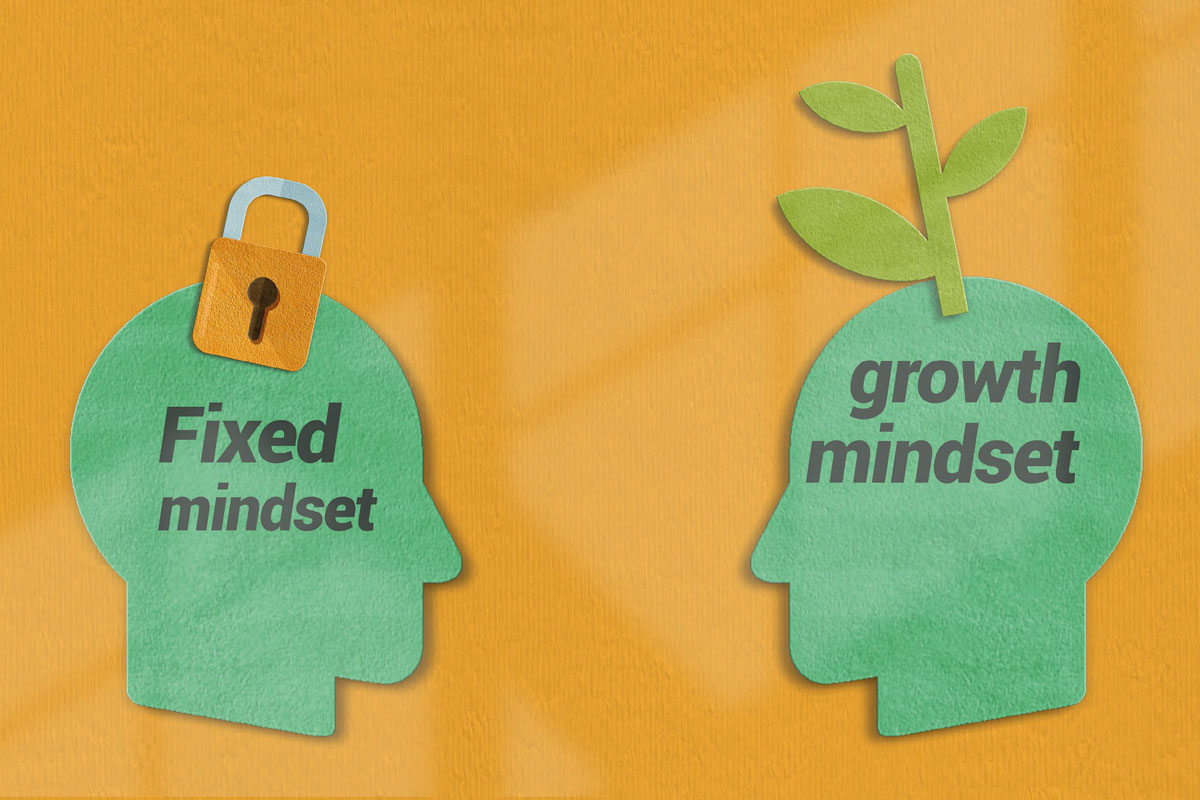
Those with a growth mindset seek challenges as opportunities to learn and improve from, to foster resilience, a willingness to embrace new experiences and to be able to cultivate their qualities from these efforts. The hallmark of the growth mindset is ‘the passion to stretch yourself and stick to it, especially when it’s not going well’.1 A fixed mindset stands in the way of development and change. However, individuals with this mindset believe that their abilities and talents cannot be significantly developed, so they may avoid challenges and not demonstrate extra effort in the face of obstacles.
Encouraging a growth mindset
Are your team discouraged when a task requires a lot of effort due to the risk of feeling like they will be labelled a failure? Or do they enjoy taking on a challenge, learning from failure and continuing their efforts?1
A growth mindset is incredibly beneficial for a team to energise and motivate one another.
The right mindset is key to reaching our full potential. Establishing a common mindset in any team is fundamental to ensure that the overall vision is aligned with all members of the team, working harmoniously towards the same goals. A growth mindset in a team allows the freedom to value what they are doing, regardless of the outcome. An appreciation of that mindset is directly related to performance levels. A team must be supported to develop a growth mindset in order to cope with setbacks and optimise performance.
Finding the right potential in your team
Interestingly, NASA rejects applicants with a history of pure success and prefers individuals who have bounced back from significant set-backs. I found this fascinating as in dentistry we often recruit based on the ‘ideal’ CV. How often, though, do we ask job applicants about their setbacks and how they managed them? Failures and set backs do not define us. They should be seen as opportunities for learning and growth and a way to show our true potential. An interview could be a chance to understand the mindset of a potential new addition to your team and how they have used their past challenges to transform and ignite their learning.
Supporting students and trainees
Studies have shown that students with a fixed mindset lose interest if they face a challenge, whereas those with a growth mindset continue to show the same amount of interest. An understanding of the difference between the two can enable us to offer the right support and tailor our teaching of dental students and ‘dentists in training’ to foster their potential. The new generation of dentists would benefit from the realisation that rejection in a job application, failing an exam or being unsuccessful in a professional endeavour should not define them. It should be a basis for them to strive harder in the future with the potential for brighter career prospects. Learning should not be a race. We should encourage those in training to seek challenges to stretch themselves and develop endless curiosity, with the focus being on the process of learning and not the final end result.
Conclusion
With a growth mindset, one can take the risks, confront the challenges and use these opportunities to flourish. Exceptional individuals have a ‘special talent for identifying their own strengths and weaknesses’.2 Next time you face an obstacle, consider how you can confront this with a growth mindset, showing resilience in the face of a set-back and convert the challenge at hand into a future success. A ‘mindset’ is simply a powerful belief. As the word implies, they are in your mind! You can always change your mind. Remember, ‘becoming is better than being’.
Key points
- A life coach will lead a client into awareness through a series of empowering questions
- Our core values, identity and beliefs drive our everyday actions and behaviours
- Those with a growth mindset seek challenges as opportunities to learn and improve themselves
Leave a Reply